Islamabad, September 4, 2026: Under the chairmanship of Syed Mustafa Mehmood, MNA. The Committee confirmed the minutes of its previous meeting held on 07th July, 2026 and subsequently examined the implementation status of its previous recommendations.
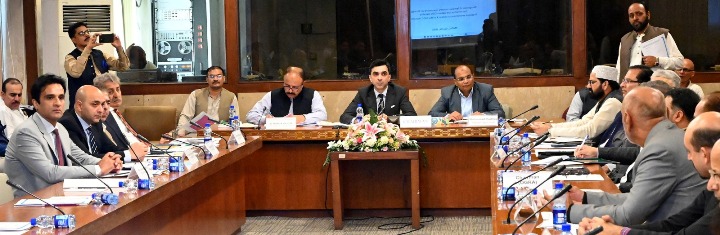
The Committee commenced consideration of the Natural Gas (Development Surcharge) (Amendment) Bill, 2026 (Government Bill) and the Gas Infrastructure Development Cess (Amendment) Bill, 2026 (Government Bill) and recommended to defer the Bills.
After deferring consideration of the Bills, the Committee allowed the Executive Director, Fertilizer Manufacturers of Pakistan Advisory Council (FMPAC), to present his views on the GIDC (Amendment) Bill, 2026 (Government Bill). He apprised the Committee that the GIDC had originally been imposed as a purpose-specific levy for the development of gas infrastructure. He stated that the Government had now introduced the GIDC (Amendment) Bill, 2026, which included an expanded concept of strategic gas infrastructure. He further informed the Committee that, since the promulgation of the GIDC Act, fertilizer manufacturers had invested over US$300 million from their own resources in gas-related infrastructure, with a further investment of more than US$200 million planned. He added that the fertilizer industry contributes approximately 44% of the GIDC while accounting for approximately 19% of national gas consumption. He contended that the proposed amendment provided an opportunity to address the existing policy anomaly, which ultimately had an impact on farmers.
The Executive Director further apprised the Committee that the proposed amendment would increase the financial burden on fertilizer companies. During the briefing, a member of the Committee observed that the amount collected under the GIDC should ultimately benefit the farmers and that the price of fertilizer should be determined on the basis of demand and supply factors. He further emphasized that the implications of international sanctions, particularly in the context of Iran and Afghanistan, should also be taken into consideration. He cautioned that, otherwise, power companies might raise similar concerns in the future, as had been raised by fertilizer companies. The member expressed that he was not in favour of supporting the proposal presented by the Executive Director. Other members of the Committee endorsed the viewpoint of said Member/MNA.
The representative of the Petroleum Division apprised the Committee that the principal objective of introducing the Bill was to bring more areas of the country into the tax net. The FMPAC representative further proposed that, while considering the GIDC (Amendment) Bill, 2026, Parliament may incorporate a provision enabling verified and qualifying investments in gas infrastructure made by GIDC-paying fertilizer manufacturers to be recognized and adjusted against their GIDC liability.
The Committee subsequently received a briefing on the Petroleum Training Fund and the proposed guidelines for its utilization. Members expressed concern over the accumulation and underutilization of the funds and stressed that the intended beneficiaries, particularly deserving students, youth and communities in petroleum-producing areas, should derive tangible benefits from the Fund.
The Committee directed the Petroleum Division and the Directorate General Petroleum Concessions (DGPC) to formulate comprehensive, transparent, merit- and need-based guidelines for the utilization of the Training Fund. The proposed guidelines should clearly prescribe eligibility and selection criteria, priority areas, recognized educational institutions and training providers, monitoring and audit mechanisms, supervision arrangements and measurable outcomes. The Committee emphasized that the Fund should focus on quality education, scholarships, professional training and employable skills rather than merely the construction of buildings or establishment of training centres without measurable results.
The Committee further stressed that utilization of the Fund should be transparent, need-based and result-oriented, with appropriate quarterly or half-yearly monitoring and reporting mechanisms. Members suggested that the experience of Corporate Social Responsibility (CSR) funds may also be examined to ensure that the benefits of the Training Fund reach local communities in petroleum-producing areas.
The representative of DGPC informed the Committee that revised Training Fund Guidelines had been prepared in light of the observations of the Committee. The Committee directed DGPC to consult the provincial governments and other relevant stakeholders before finalizing the guidelines and specifically emphasized that the draft guidelines should be discussed in detail with provincial representatives rather than merely circulated for information.
The meeting was attended by Members namely, Mr. Muhammad Bilal Badar, Mian Khan Bugti, Syed Naveed Qamar, Mr. Asad Alam Niazi, Mr. Salahuddin Junejo and Mr. Gul Asghar Khan. Senior officers from the Petroleum Division, M/o Law and Justice, DGPC, OGRA, and the Energy Departments of Punjab, Balochistan, Sindh, and Khyber Pakhtunkhwa also attended the meeting.

 Print
Print