Dr. Nafisa Shah Calls for Strengthened Implementation of Anti-Harassment Laws to Promote Gender-Friendly Workplaces-
She Urges Strengthened Institutional Coordination for Effective Anti-Harassment Enforcement.
Islamabad, February 18, 2026: A meeting of the Special Committee on Gender Mainstreaming was held today in the Committee Room of the Federal Ombudsperson Secretariat for Protection Against Harassment (FOSPAH), Islamabad, under the chairpersonship of Hon. Dr. Nafisa Shah, MNA.
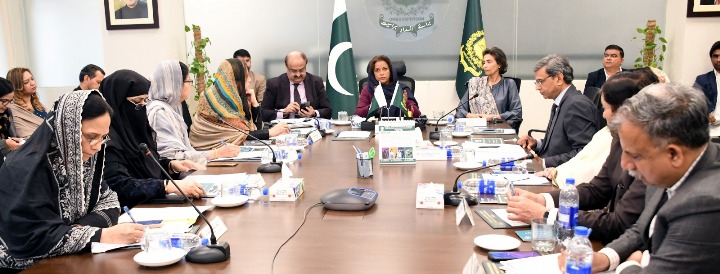
The Committee visited the Federal Ombudsperson Secretariat for Protection Against Harassment (FOSPAH), where the Hon. Federal Ombudsperson briefed the Committee on the background, institutional infrastructure, and mandate of FOSPAH in the light of The Protection against Harassment of Women at the Workplace Act, 2010 (as amended in 2022), The Enforcement of Women’s Property Rights Act, 2020, and The Federal Ombudsmen Institutional Reforms Act, 2013. She apprised the Committee of the procedure for filing complaints and the remedies available to victims. She also drew the Committee’s attention to the challenges faced in ensuring the effective dispensation of justice, including limited cooperation from certain departments and bodies, as well as administrative and financial constraints.
The Hon. Federal Ombudsperson sought the Committee’s support in legislative and policy matters, expediting necessary legal amendments, strengthening parliamentary oversight on issues of harassment, gender equality, and women’s property rights, enhancing inter-institutional coordination mechanisms with the police, labour departments, regulators, and civil courts, endorsing nationwide sensitization and awareness initiatives under the gender mainstreaming policy, and ensuring adequate budgetary support.
The Parliamentary Committee on Gender Mainstreaming commended the commendable performance of the Secretariat of the Federal Ombudsperson Secretariat for Protection Against Harassment (FOSPAH), particularly acknowledging its recent bold and groundbreaking orders aimed at safeguarding women in educational institutions. The Committee noted that these decisive interventions have set an important precedent in reinforcing accountability and strengthening institutional responsibility in cases of harassment.
Dr. Nafisa Shah observed that certain provisions of the property law appear to be in contradiction with the jurisdiction of the Sessions Court, which may lead to procedural ambiguities and jurisdictional overlaps in the adjudication of cases. She emphasized the need for a comprehensive legal review to harmonize the relevant statutes in order to ensure clarity, avoid conflicting interpretations, and facilitate the effective dispensation of justice.
Dr. Nafisa Shah stressed the importance of strengthening FOSPAH at the provincial level by enhancing its institutional presence, human resources, and operational capacity to ensure timely and accessible relief to complainants across the country. The Chairperson underscored the necessity of improved coordination between FOSPAH and provincial authorities, including home departments, police, labour departments, and social welfare institutions, to ensure seamless implementation of decisions and enforcement of orders.
The Chairperson also highlighted the need to establish a joint and streamlined mechanism for addressing complaints of harassment, aimed at minimizing duplication of proceedings, reducing delays, and providing a victim-cantered approach to justice.
Dr. Nafisa Shah also advocated for the creation of a dedicated research wing within FOSPAH to undertake policy research, collect and analyse gender-disaggregated data, assess emerging trends in harassment and women’s property rights cases, and support evidence-based legislative and policy reforms. She noted that
Dr. Nafisa Shah emphasized that the implementation of anti-harassment laws and policies must be significantly strengthened to make workplaces more gender-friendly and inclusive. She stressed the importance of establishing and effectively operationalizing proper institutional mechanisms, ensuring strict compliance with legal provisions, and instituting transparent monitoring systems.
She urged that institutional coordination mechanisms between the Ombudsman’s office, police, labour departments, and relevant regulatory bodies be strengthened to ensure the effective implementation of decisions and full compliance with anti-harassment laws. She emphasized that seamless collaboration among these institutions is crucial for timely enforcement, accountability, and the creation of safe and equitable work environments.
The Committee expressed grave concern over the increasing reports of harassment in educational institutions and underscored the urgent need for a more proactive and transparent response from the Higher Education Commission (HEC). The Committee emphasized that complaints of harassment must be addressed with seriousness, sensitivity, and due diligence, rather than being dismissed or denied without thorough inquiry. The Committee further urged the HEC to strengthen its oversight mechanisms, ensure the effective functioning of anti-harassment committees within universities, and guarantee that all reported incidents are investigated promptly and impartially. The Committee stressed that creating a safe, respectful, and inclusive academic environment must remain a paramount priority, and directed the HEC to take concrete, time-bound measures to restore confidence in the complaint redressal system.
The Committee recommended a comprehensive review and revision of the existing policy framework governing harassment cases, with a view to enhancing accountability, victim protection, and institutional responsibility.
The Committee further called upon the Higher Education Commission (HEC) to ensure the strict enforcement of robust anti-harassment rules and mechanisms to effectively address the widespread incidents of harassment against women in educational institutions. It emphasized the need for clear implementation guidelines, vigilant monitoring, and zero tolerance for non-compliance, so as to foster a safe, dignified, and equitable academic environment for women across the country.
The Committee recommended that a comprehensive nationwide awareness campaign be undertaken to enhance public understanding of harassment laws and the available complaint and redressal mechanisms. In this regard, the Committee emphasized the importance of utilizing both traditional and digital media platforms, including coordination with media regulators such as the Pakistan Electronic Media Regulatory Authority (PEMRA), to ensure wide outreach and effective dissemination of information. The Committee underscored that sustained and strategic awareness efforts are essential to empower victims, promote timely reporting, and foster a culture of zero tolerance towards harassment across all sectors of society.
The Hon. Federal Ombudsperson responded comprehensively to a number of questions and queries raised by the Hon. Members of the Committee and other participants, providing detailed clarifications and relevant explanations on the matters under discussion.
The meeting was attended by Senator Rubina Qaim Khani, Senator Khalida Ateeb, Ms. Shahida Rehmani, MNA, and Ms. Shahida Begum, MNA. The meeting was further attended by the Federal Ombudsperson for Protection Against Harassment of Women, along with senior officials from the Federal Ombudsperson Secretariat for Protection Against Harassment (FOSPAH) and the Ministry of Human Rights.

 Print
Print